I really enjoy listening to cool music with MP3 and MP4 player these days. But listening to your favorite music on your Lolo’s time wasn’t always this convenient or easy. How did our parents and grandparents listen to their favorite tunes?
The Phonograph
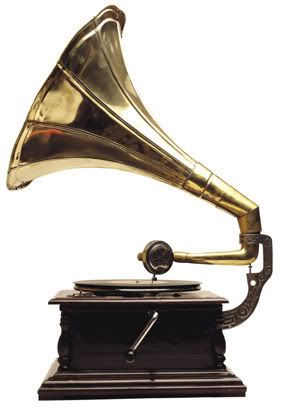 In 1877, American inventor Thomas Alva Edison created the phonograph. Using a sheet of tin foil mounted on a hand-cranked cylinder, he spoke into the diaphragm from a telephone’s mouthpiece, which was connected to a stylus needle from a telegraph machine. His voice created vibrations in the stylus, which etched out scratches on the tin foil. The first historic words ever to be recorded and played back were, “Mary had a little lamb/ Its fleece was white as snow/ And Everywhere that Mary went/ The lamb was sure to go.”
The Gramophone
In 1888, German inventor Emile Berliner patented the gramophone. It was similar to Edison’s machine, but while the phonograph used a cylinder to record sounds, the gramophone used flat discs, like the LP records of your granddad’s day. With flat discs, many copies of a disc could be produced, thus starting the worldwide boom in the recording industry.
The Cassette Player
 Originally developed in 1962, the cassette tape is still the most widespread method of sound recording. They’re reliable, cheap and capable of Hi-Fi stereo sound. Your kuya probably still has stash of Menudo or Michael Jackson tapes somewhere at home.
The CD player
Silvery, shiny, and invented by Sony and Philips in 1982, the Compact Disc or CD wasn’t popular at first but eventually became the medium of choice by the end of the ‘80s. CDs eliminated the hiss of tapes and the snap-crackle of record players, leaving listeners with a pure musical experience.
And here comes the MP3 and MP4 players
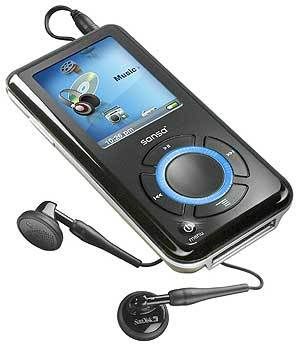 MP3 and MP4 stands for Motion Picture Experts Groups Audio Level 3 and 4. MP3 technology has revolutionized the music industry by allowing people to download, transfer, rip and share music over the Internet. You can also share music from computer to computer, and from computer to cool devices like the ever-popular iPod series, which let you carry almost your entire music collection with you wherever you go!
That’s it for the evolution of music players. Now you know what your Grandpa use on listening to musics.
The Phonograph
In 1877, American inventor Thomas Alva Edison created the phonograph. Using a sheet of tin foil mounted on a hand-cranked cylinder, he spoke into the diaphragm from a telephone’s mouthpiece, which was connected to a stylus needle from a telegraph machine. His voice created vibrations in the stylus, which etched out scratches on the tin foil. The first historic words ever to be recorded and played back were, “Mary had a little lamb/ Its fleece was white as snow/ And Everywhere that Mary went/ The lamb was sure to go.”The Gramophone
In 1888, German inventor Emile Berliner patented the gramophone. It was similar to Edison’s machine, but while the phonograph used a cylinder to record sounds, the gramophone used flat discs, like the LP records of your granddad’s day. With flat discs, many copies of a disc could be produced, thus starting the worldwide boom in the recording industry.
The Cassette Player
Originally developed in 1962, the cassette tape is still the most widespread method of sound recording. They’re reliable, cheap and capable of Hi-Fi stereo sound. Your kuya probably still has stash of Menudo or Michael Jackson tapes somewhere at home.The CD player
Silvery, shiny, and invented by Sony and Philips in 1982, the Compact Disc or CD wasn’t popular at first but eventually became the medium of choice by the end of the ‘80s. CDs eliminated the hiss of tapes and the snap-crackle of record players, leaving listeners with a pure musical experience.
And here comes the MP3 and MP4 players
MP3 and MP4 stands for Motion Picture Experts Groups Audio Level 3 and 4. MP3 technology has revolutionized the music industry by allowing people to download, transfer, rip and share music over the Internet. You can also share music from computer to computer, and from computer to cool devices like the ever-popular iPod series, which let you carry almost your entire music collection with you wherever you go!That’s it for the evolution of music players. Now you know what your Grandpa use on listening to musics.


0 comments:
Post a Comment